If I run one of the best coffee shops in Los Angeles, the fastest way to cut waste is simple: audit what goes in the trash, set up landfill/recycling/organics bins side by side, move coffee grounds and food scraps into compost, and train staff to sort the same way on every shift.
Here’s the short version:
- Start with a 1-week waste audit so I know what my shop throws away most
- Focus on organics first because coffee grounds and food scraps often make up 60% to 70% of cafe waste
- Use a 3-bin setup with clear labels based on the items my shop hands out
- Shift volume out of landfill because in LA, a 3-yard landfill bin costs about $326.04/month, while a compost bin at the same pickup rate costs about $103.43/month; recycling is free
- Train staff and track results monthly to cut contamination, lower hauling bills, and avoid SB 1383 fines starting at $500 per violation
A few moves do most of the work: put compost bins near the espresso bar, use real mugs for dine-in, buy lower-waste supplies, and check contamination before bags are tied. Small fixes at the bin station can lead to lower trash volume and lower monthly costs.
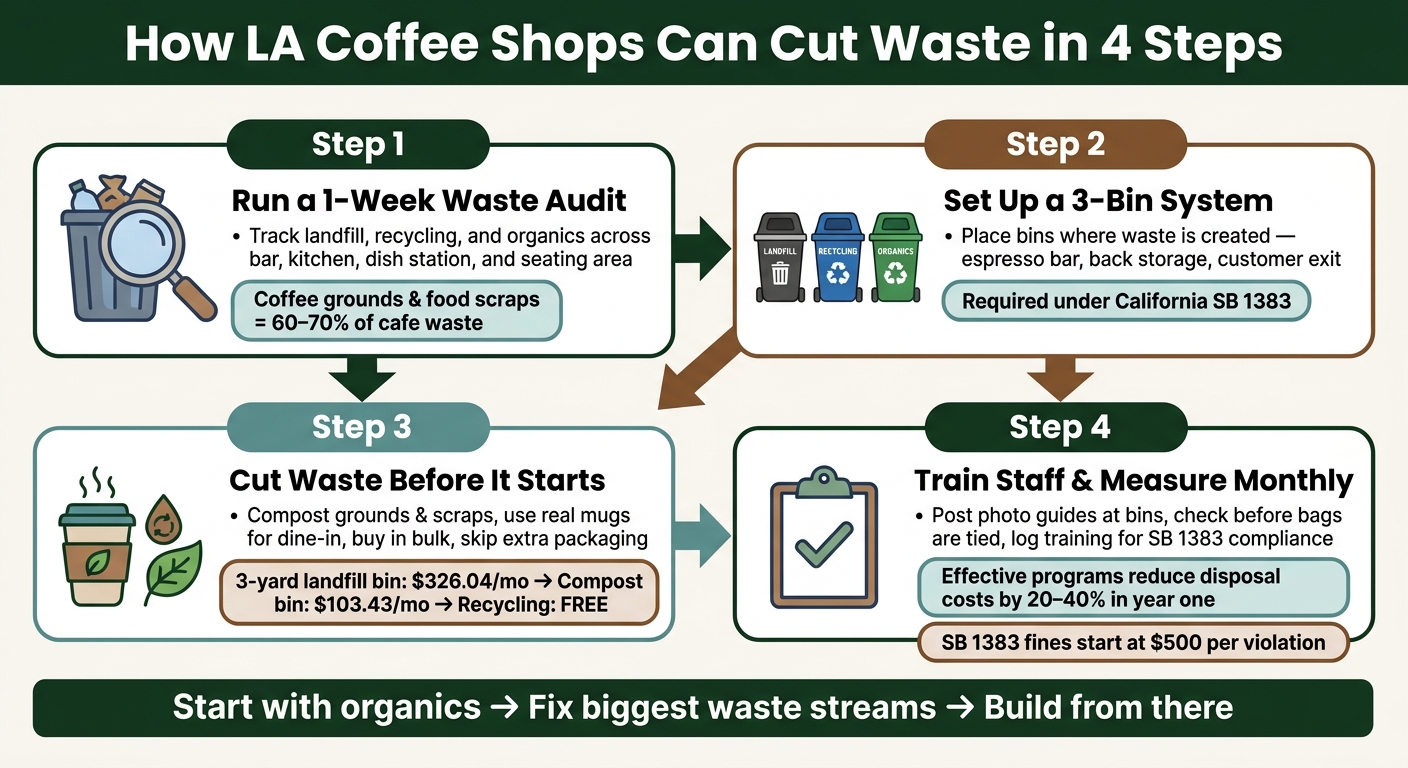
How LA Coffee Shops Can Cut Waste in 4 Steps
Minimizing Wastage in Your Cafe for a Greener more Profitable Business
sbb-itb-1d31003
Quick Comparison
| Step | What I do | Main goal | Why it matters |
|---|---|---|---|
| Audit | Track trash, recycling, and organics for a week | Find the biggest waste streams | Stops guesswork |
| Bin setup | Place 3 bins where waste happens | Make sorting easy | Cuts contamination |
| Source reduction | Compost organics, use reusables, buy with less packaging | Reduce waste before disposal | Lowers trash volume |
| Training + tracking | Train staff, review costs and contamination each month | Keep the system in place | Supports compliance and cost control |
Bottom line: I’d start with organics, fix the biggest waste streams first, and build from there.
Step 1: Run a waste audit before changing supplies or bins
Before you swap out bins, rewrite signs, or buy new supplies, spend one week tracking what your shop actually throws away.
That gives you a clear picture of what’s going to landfill, recycling, and compost. And it helps you avoid guessing.
Track what goes to landfill, recycling, and compost
Track one weekday and one weekend day. Check the bar, kitchen, dish station, and seating area, and record what gets discarded and where.
In the best coffee shops in LA, the main waste streams to watch are:
- Coffee grounds
- Food scraps
- Cups and lids
- Napkins and paper filters
- Pastry packaging
- Milk jugs
- Cardboard
- Printed kitchen tickets
Paper filters often get missed. They’re small, cheap, and easy to ignore in the trash, but they still add up.
While you’re checking bins, look for contamination too. That means recyclables tossed in the trash or plastic lids dropped into compost. When that keeps happening, it usually points to one of three problems: bad bin placement, labels that don’t say enough, or staff who haven’t been shown the system clearly.
Find the easiest first wins
Once you’ve mapped your waste streams, look for the high-volume items that are easiest to separate.
Coffee grounds and food scraps are often the best place to start. Cardboard is another quick win if it’s still ending up in the trash. And if dine-in customers are using single-use cups, moving them to ceramic mugs is a simple fix.
Start with the biggest streams that are easy to sort. Then pick two or three changes your team can stick with during busy shifts. Those top waste streams should shape where your next bins go and what each one says.
Step 2: Set up a three-bin system that staff and customers can follow
Once the audit is done, set up bins so sorting feels like the easy, no-brainer option.
Under California's SB 1383, Los Angeles businesses need to separate organic waste from regular trash. That means if you have a landfill bin in one spot, you should place recycling and organics bins right next to it. The rule is simple. The setup is what makes people follow it.
Place bins where waste is created
Put bins where waste happens.
Behind the bar, keep compost and recycling bins within arm’s reach of the espresso station and prep area. In the back, store flattened cardboard in a dry storage area so it stays clean and recyclable. Out front, the customer sorting station usually works best near the condiment counter or by the exit, where people tend to stop before heading out.
Label bins with the cafe's real packaging items
Use labels that show the actual items your cafe hands out, like your cup, lid, and pastry bag.
Keep the wording short and specific. For the green organics bin, list coffee grounds, food scraps, food-soiled paper, meat, dairy, and bread. For the blue recycling bin, focus on empty glass, aluminum, and empty, rinsed containers. Leftover food or liquid can contaminate the rest of the bin, and paper-looking cups with plastic liners usually aren’t recyclable.
Step 3: Cut waste at the source with composting, reusables, and smarter purchasing
Once your bins are set up and people are using them the right way, the next move is simple: stop waste before it starts. Sorting matters. But source reduction matters just as much. If you buy less throwaway stuff and serve with less waste, there’s less to deal with later.
Compost coffee grounds, food scraps, and other organics
Coffee grounds are one of the easiest things to keep out of the landfill. Most cafes produce them every single day, in steady amounts, which makes them a good fit for organics diversion. In Los Angeles, organics programs accept coffee grounds, food scraps, spoiled dairy, meat, and bread.
If on-site composting isn’t an option, a local organics pickup service is usually the next best move. Sending grounds and scraps to organics instead of the landfill can shrink how much trash you haul away and help lower landfill costs.
Use real mugs for dine-in and offer a small discount for reusable cups
The same idea applies to cups and other serviceware: use reusables by default when you can. For dine-in orders, make ceramic mugs or glassware the standard choice. Only hand out a disposable cup if a customer asks for one.
For to-go drinks, give people a small discount or another perk when they bring a reusable cup. It’s a small shift, but over time it can chip away at a lot of single-use waste.
Buy lower-waste supplies and order in bulk when possible
What you buy shapes what ends up in the trash. That’s the heart of it. If you want less waste, start with purchasing.
A few simple changes can help:
- Combine deliveries when possible
- Buy in bulk
- Ask suppliers to skip extra bags on deliveries
When you pick serviceware, don’t go by the marketing label alone. Go by the actual disposal path. For most cafes, reusables make sense for dine-in. rPET usually works better for standard to-go service. Compostables only make sense if your waste system can actually process them.
PLA needs commercial composting. If your local system doesn’t take it, rPET is usually the safer default.
Of course, even the best setup can fall apart during a busy rush. These choices only work if staff use them the same way, day after day, during service.
Step 4: Train the team, measure results, and keep the system working
Once the bins are in place, the next job is making sure the system holds up on every shift. That comes down to training, simple checks, and a quick look at the numbers each month.
Train staff to prevent contamination during busy shifts
Train new hires on day one, then give the whole team short refreshers during regular meetings.
Post a one-page photo guide near prep, dish, and customer bins. Use your cafe's actual cups, lids, bags, and food scraps. That way, staff don't have to guess when things get hectic.
Check bins before bags are tied, and fix mistakes right away with calm feedback. A quick correction in the moment works better than letting bad habits stick.
Keep a simple training log so you can show who was trained and when during SB 1383 checks.
Track waste reduction and share progress with customers
After the team is trained, look at whether the system is doing its job.
Track:
- diversion rate
- contamination
- monthly hauling costs
Review these once a month to spot trends without adding much admin work.
Effective waste management programs can reduce disposal costs by 20% to 40% within the first year. In Los Angeles, a standard 3-yard landfill bin costs $326.04/month with once-weekly pickup, while recycling is free. So when you move more material out of landfill and into recycling or organics, the savings can build fast.
Share one monthly update with staff and customers, and post it near the bins. Keep it short. A line like "Last month we cut landfill waste and kept contamination down" gets the point across without turning it into a big announcement.
Conclusion: Start small, fix the biggest waste streams, and build from there
Start with the biggest waste stream. For most LA cafes, that's organics, since it's often the largest share of what ends up in landfill.
After you get organics under control, move to sorting, reusables, and purchasing. Stick with the same sequence used in this guide - audit, bin setup, source reduction, and training - so the system doesn't outpace your team. A simple way to do this is to choose two or three changes your staff can keep up with, dial those in, and then add more. It's better to fully put a few changes in place than to make scattered, half-finished progress across a long list.
Track diversion rates and hauling costs so you can see whether the changes are saving money. That's a clear operational win.
Start with one stream, get it right, then build from there.
FAQs
How do I start a waste audit?
Start by tracking and sorting every waste stream in your Los Angeles coffee shop over a normal business week. Log items like coffee grounds, food scraps, packaging, and paper products, then measure daily and weekly amounts so you have a clear baseline.
Next, look at where that waste is coming from. Note busy periods, sort waste by material like glass, plastic, and paper, and check whether each item is going into the right bin. This gives you a clear map of waste sources, helps you review disposal costs, and makes it easier to set realistic waste-cut goals.
What belongs in each bin?
To meet Los Angeles waste rules, set out clearly labeled bins for three waste streams:
- Organics: food scraps, yard waste, and food-soiled paper. This includes meat, dairy, and bread.
- Recycling: paper, plastic, and glass. Keep items clean and dry.
- Landfill: leftover trash that can’t be composted or recycled.
One small mistake can spoil a whole bin, so keep plastic and foam out of organics to avoid contamination.
How can I cut contamination fast?
Simplify your inventory so packaging stays more consistent. Then place clearly labeled recycling, compost, and landfill bins in high-traffic areas. Add simple visual charts so staff and customers can see, at a glance, what goes where.
Train staff on sorting from day one. Check bins often so you can catch mistakes early. And make sure compostables are BPI-certified so they’re accepted and don’t contaminate organics.