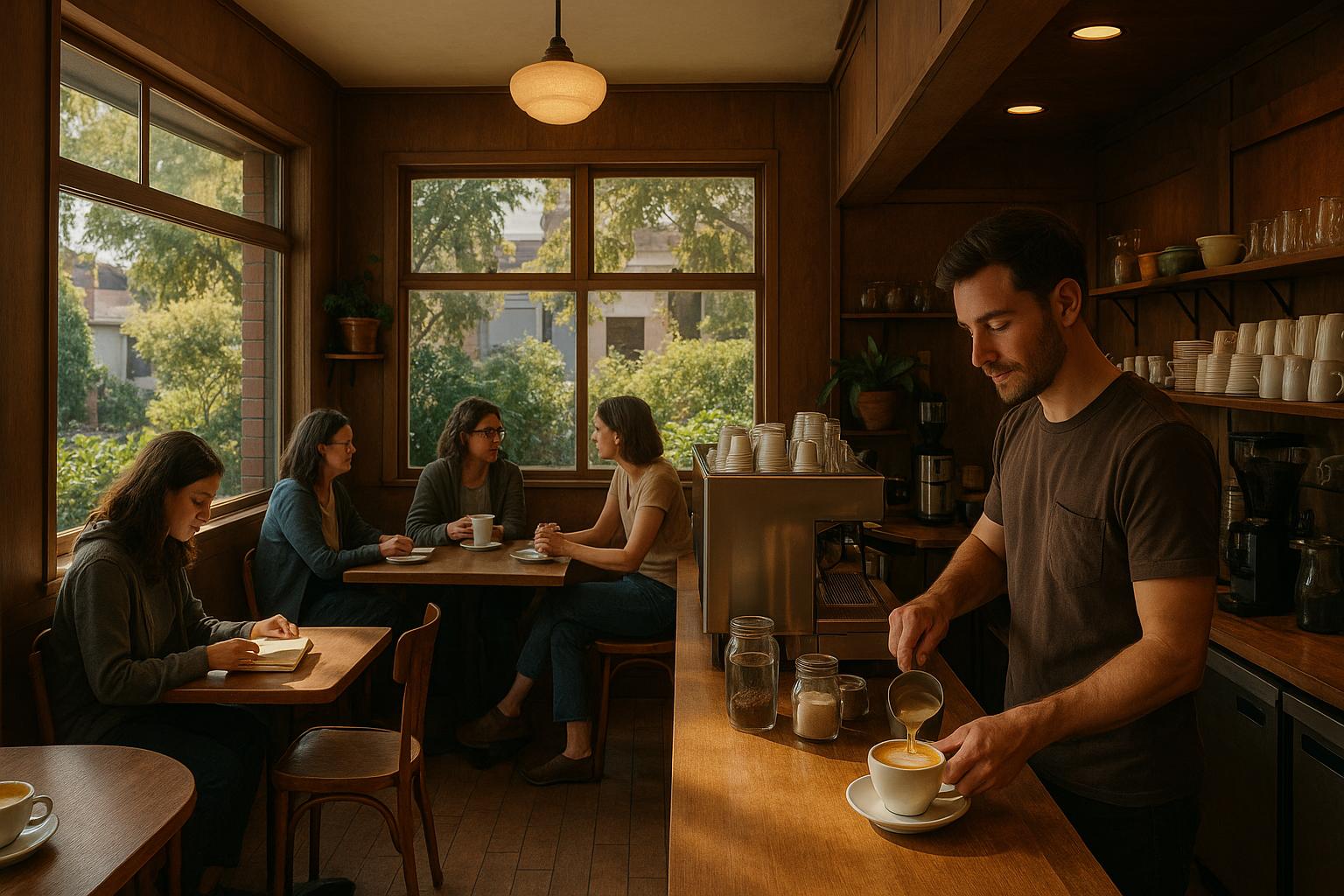
Step into any coffee shop in Los Angeles, and you’ll notice music is more than background noise - it’s a key part of the experience. In 2025, cafes are using music to create the right atmosphere, attract specific crowds, and keep customers coming back. Three major trends dominate:
- Lo-Fi & Chillhop Playlists: Calm, repetitive beats that help freelancers and students focus. Popular with younger crowds, these playlists are easy to manage with platforms like Spotify.
- Indie & Local Artist Selections: Personalized playlists featuring regional talent. These create a sense of community and appeal to creatives and music lovers, though they require more effort to curate.
- Jazz & Vinyl Revival: Retro vibes with rich soundscapes from vinyl records. These spaces attract trendy, style-conscious customers but come with higher costs and maintenance.
Each approach shapes the cafe’s vibe and customer experience differently. Whether it’s the mellow tones of lo-fi, the energy of indie, or the nostalgia of vinyl, music has become essential to LA’s coffee shop culture.
Los Angeles Morning Coffee Jazz ☕ Sunny Cafe Ambience (3 Hours)
1. Lo-Fi and Chillhop Playlists
Lo-fi and chillhop have become the go-to soundtracks for many of LA's coffee shops. These genres strike the perfect balance between being engaging and unobtrusive, making them ideal for spaces where people come to work, read, or simply unwind.
Ambiance Impact
The mellow, looping rhythms of lo-fi and chillhop create a soothing atmosphere in a city as fast-paced as Los Angeles. Take Cafe Nido in East Hollywood, for example. They pair carefully curated Spotify playlists with minimalist interiors and lush greenery, offering a peaceful escape from the urban chaos.
"The space was specifically designed for people to hang out and foster a sense of community... Cafe Nido provides a tranquil respite from LA's urban jungle." – Mariana, LA
When combined with warm lighting, natural wood tones, and clean design, these sounds amplify the sense of calm, encouraging customers to stay longer and enjoy the environment.
Customer Preferences
Lo-fi and chillhop resonate particularly well with Gen Z and younger Millennials. These groups favor consistent, low-key soundscapes that help them focus without being distracting. Data shows that 13.2% of 25–34-year-olds visit coffee shops to read, while 18.4% use them as a spot to connect to Wi-Fi or charge devices. For these customers, instrumental playlists provide the ideal backdrop for productivity or relaxation.
Sarah Mitchell, a marketing specialist in specialty coffee, highlights this connection:
"Gen Z also values ritual, consistency, and identity – three key components of specialty coffee."
With their steady beats and familiar tones, lo-fi playlists reinforce the unique identity of a coffee shop, making it a favorite spot for regulars.
Operational Effort
For café owners, managing lo-fi and chillhop playlists is straightforward and effective. Platforms like Spotify offer thousands of pre-made playlists, and many cafés even share their own public playlists, extending their vibe beyond the physical space.
Owners typically refresh their playlists weekly by swapping out 2–3 tracks and make larger updates (replacing about 20–30% of tracks) monthly to keep things fresh. Keeping the volume between 55–65 dB ensures a comfortable environment where conversations can flow freely.
It's also important to note that personal streaming subscriptions don't cover commercial use. To avoid fines and ensure high-quality audio, café owners should secure a public performance license.
"Your cafe playlist should improve the experience, never overpower it... The playlist works best when it's barely noticed but deeply felt." - Janice Kuz, Owner, Flinders Lane Cafe
2. Indie and Local Artist Playlists
Indie and local artist playlists are becoming a hallmark of coffee shops, helping to shape their unique identity. In Los Angeles, these playlists are more than just background noise - they create an inviting atmosphere that appeals to a diverse crowd.
Ambiance Impact
Featuring indie and local music gives coffee shops a personality that sets them apart. When Couplet Coffee launched its permanent Westlake location in January 2025, owner Gefen Skolnick curated a playlist featuring artists like Brandi Carlile, Chappell Roan, and Sophie. These upbeat and purposeful selections perfectly complement the shop's hand-painted decor, enhancing its lively and welcoming vibe.
"Inclusivity is ingrained in the culture behind Couplet. I want people from all backgrounds to feel like they belong here." - Gefen Skolnick, Owner, Couplet Coffee
This strategy isn’t just about aesthetics. Cafe Tondo in Chinatown, for instance, adjusts its vibe throughout the day. By day, it’s a relaxed cafe, but by evening, it transforms into a wine bar with bolero nights, salsa classes, and DJ sets. In 2025, the cafe even hosted a surprise live performance by Tame Impala, solidifying its reputation as one of LA’s most dynamic spots.
Customer Preferences
LA coffee drinkers increasingly seek out spaces that feel personal and authentic, steering clear of generic environments. As one customer, Darius Dudley, noted:
"Modern minimalist designs, prevalent in LA, often lack character." - Darius Dudley, Customer
Indie and local music playlists help bridge that gap by reflecting the shop’s personality and values. Muso Coffee in West Adams has taken this a step further by collaborating with Sofar Sounds to host intimate live music sessions, fostering a tight-knit community of coffee lovers and music enthusiasts.
Operational Effort
Creating and maintaining these playlists is no small task. It requires coffee shop owners to stay engaged with the local music scene, carefully selecting artists whose sound aligns with their brand. Regular updates keep the playlists fresh and relevant.
For shops that host live events, like Sofar Sounds sessions, the effort goes even further. Scheduling performances, managing sound equipment, and occasionally reorganizing the space are all part of the process. For a simpler approach, some cafes share their playlists on platforms like Spotify, allowing their unique vibe to reach customers even outside the shop. These efforts not only enhance the in-store experience but also strengthen community connections.
This trend of blending music and coffee shop culture sets the stage for a deeper dive into the vintage influences shaping LA's coffee shop soundscapes.
sbb-itb-1d31003
3. Jazz and Vinyl Revival
As LA’s café culture continues to evolve, jazz and vinyl are making a comeback, adding depth and texture to the city’s soundscape. Drawing inspiration from Japanese jazz kissa culture - cafés that double as intimate listening spaces - this trend is carving out a unique corner in the coffee shop scene.
Ambiance Impact
The charm of this setup lies in its warmth and intimacy. Vinyl playback creates a rich, textured sound that digital streaming simply can’t match.
"You don't get that [vibration] from an algorithmic playlist of condensed MP3 files. You don't have to go to a bar to listen to Spotify." - Assaf Tamir, Co-owner, Birds
Take Harun Coffee in Leimert Park, for example. Reopened in January 2026, this 2,200-square-foot café doubles as a community hub. The space, designed by Akin Co., features vintage Altec A7 speakers and QSC 18 subwoofers, with carpeting throughout to soften and enrich the sound. A hidden, speakeasy-style entrance behind a shelving unit leads to an evening lounge where DJs and live performers take over from 6 p.m. to 11 p.m..
"The environment is warm. It's fully carpeted, meant to feel like your very cultured auntie or grandmother's living room." - Chace Johnson, Owner, Harun Coffee
Meanwhile, Cafe 2001 in the Arts District pairs its classical and jazz vinyl selections with Brutalist architecture and Victorian furnishings, creating a space that attracts a stylish, fashion-forward crowd.
This immersive soundscape transforms these cafés into more than just coffee stops - they’re destinations.
Customer Preferences
The jazz and vinyl vibe naturally attracts a creative, trend-conscious audience. These spaces appeal to stylishly dressed freelancers, entertainment professionals, and creatives who see coffee shops as lifestyle hubs rather than quick caffeine fixes. Interestingly, Gen Z is increasingly drawn to this slower, more deliberate experience. In a global survey, 41% of Gen Z respondents named filter coffee as their favorite, reflecting a preference for ritual and authenticity over speed.
What resonates most with this demographic is the idea of organic discovery. They’re not looking for lectures on sound quality or coffee origins - they want an experience that feels curated yet effortless. Shops like Community Goods in West Hollywood tap into this by selling vinyl records alongside coffee, blending the listening experience with retail.
Creating this kind of atmosphere requires attention to detail and a hands-on approach.
Operational Effort
Running a vinyl-based café is much more involved than hitting “play” on a digital playlist. Staff need to carefully select records, flip LPs manually, and adjust the music to suit the mood of the crowd. This skill, rooted in the Japanese concept of kūki o yomu (reading the room), takes time and practice to master.
On top of that, vintage audio equipment requires regular upkeep and can be a costly investment. Acoustic treatments like carpeting and paneling also add to the initial setup expenses. Maintaining the sound quality and vibe takes constant effort.
Another challenge is managing customer behavior. Unlike Japan’s kissas, where the culture leans toward quiet listening, American cafés are often more conversation-driven. Without clear cues - whether through design, signage, or staff interaction - the carefully curated ambiance can quickly turn into background noise.
"In Japan, listening culture often self-regulates... Internationally, bar culture is typically louder and more conversation-led by default. Without clear cues, the space reverts to ordinary bar noise." - Bobby Carey, Co-founder, Studio Ryecroft
Pros and Cons
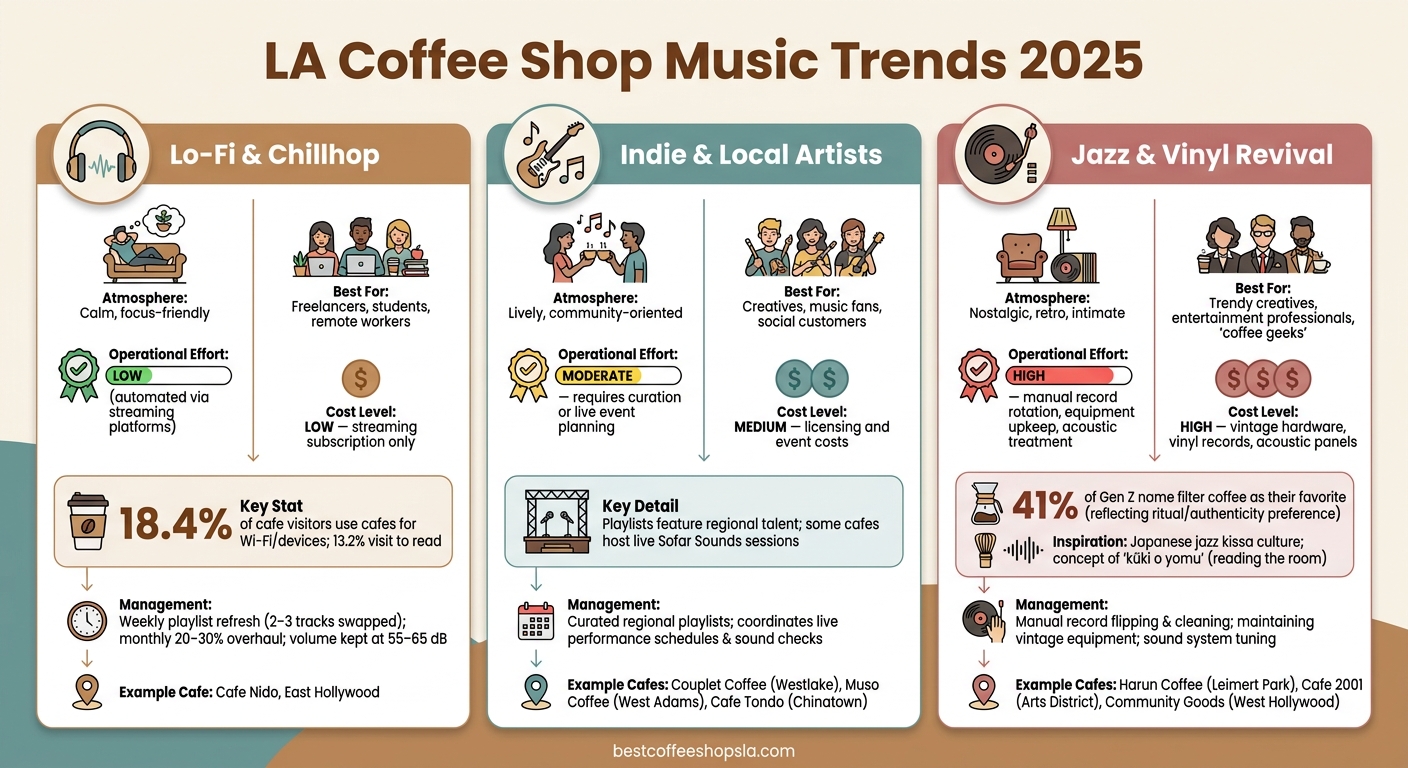
LA Coffee Shop Music Trends 2025: Lo-Fi vs. Indie vs. Vinyl
Every music approach discussed in this article comes with its own set of trade-offs. The right choice depends on the atmosphere a café wants to create and the level of effort it’s prepared to commit.
| Music Approach | Atmosphere | Customer Response | Operational Effort | Cost Level |
|---|---|---|---|---|
| Lo-Fi & Chillhop | Calm, focus-friendly | Popular with freelancers and students for remote work | Low - automated via streaming platforms | Low (streaming subscription) |
| Indie & Local Artists | Lively, community-oriented | High social engagement; attracts creatives and music fans | Moderate - requires curation or live event planning | Medium (licensing/events) |
| Jazz & Vinyl Revival | Nostalgic, retro vibes | Appeals to trendy crowds and "coffee geeks" | High - manual record rotation and equipment upkeep | High (hardware and records) |
These metrics highlight the unique trade-offs of each music strategy. The decision ultimately hinges on the desired vibe and the café’s operational capacity, ensuring the music complements its overall identity.
Lo-Fi & Chillhop is the easiest to manage. A pre-made playlist can run on its own, allowing staff to prioritize other tasks. However, while convenient, this approach risks feeling too generic and may not leave a lasting impression.
Indie and local artist playlists strike a balance between effort and engagement. Take Muso Coffee in West Adams as an example - by teaming up with Sofar Sounds to host live events, they’ve cultivated a loyal community of creatives and music lovers. Though this requires coordination, the payoff is a stronger connection with customers.
Jazz and vinyl, on the other hand, demands the most effort. From handpicking records to maintaining equipment, this approach involves significant time and resources. But when done right, it creates a standout, memorable experience that resonates with customers who appreciate a retro, curated touch.
Ultimately, the best choice depends on a café's personality, its neighborhood, and the audience it wants to attract. Music plays a pivotal role in shaping the customer experience, making it just as important as the coffee itself.
Conclusion
The music scene in LA's coffee shops in 2025 reflects a diverse and intentional approach. Lo-fi and chillhop playlists provide a calm backdrop for freelancers and students seeking focus, while indie and local artist selections foster a sense of community and shared interests. Jazz and vinyl, on the other hand, elevate the coffee shop experience, turning a simple visit into something special and atmospheric.
Music has become a defining element of café identity, extending beyond the daytime vibe. Take Cafe Tondo in Chinatown, for example. It transitions seamlessly from a peaceful morning bakery to a lively, DJ-led nightlife spot, with music at the heart of this transformation. This shift highlights how cafés are reimagining their roles in modern culture.
"The cafés that will lead the future are those able to combine technical mastery with creative vision, embracing new trends while shaping unique experiences for their guests." - Dalla Corte
Cafés that stand out treat music not as an afterthought but as a core part of their brand. Whether it's the soothing calm of lo-fi, the vibrant energy of indie, or the nostalgic charm of vinyl, a carefully curated soundscape leaves a lasting impression.
Want to see how LA cafés are bringing these trends to life? Check out Best Coffee Shops in Los Angeles - a handpicked guide to over 200 venues, sorted by neighborhood and vibe.
FAQs
How do coffee shops pick music that fits their vibe?
Coffee shops often select music strategically, tailoring it to their target audience, the time of day, and the vibe they want to create. A common approach is day-parting, where playlists shift as the day progresses. For instance, mornings might feature soft acoustic tracks or jazz to set a calm tone, while lunchtime brings more upbeat tunes to match the energy of the crowd.
Volume and tempo are also key considerations. Music is typically kept at a conversation-friendly level (around 55–65 dB) to maintain a pleasant atmosphere. The goal is to have the music reflect the cafe’s unique personality while subtly enhancing the customer experience.
Do cafes need a music license to play Spotify?
Yes, cafes are required to have a music license from Performance Rights Organizations (PROs) such as ASCAP, BMI, or SESAC to legally play Spotify or any other copyrighted music in a public setting. Without the appropriate licensing, using copyrighted music in a business environment can result in legal complications.
Which music style keeps customers staying longer?
Playing slow-tempo music in coffee shops can subtly encourage customers to linger. The calming rhythm helps create a cozy and inviting environment, perfectly matching the relaxed atmosphere that many coffee shop visitors seek.