SCA Sensory Skills offers 3 levels: Foundation for tasting basics, Intermediate for consistent evaluation, and Professional for leading sensory programs. Before enrolling, confirm the prerequisites, exams, trainer authorization, and total cost in writing.
- Foundation: A starting point for beginners learning aroma, flavor, and cupping.
- Intermediate: About 14 hours focused on sensory testing and leading tastings. Foundation-level knowledge is strongly recommended.
- Professional: About 21 hours focused on sensory panels and taster training. Intermediate certification is required.
This guide covers course expectations, assessments, fees, career uses, and how Sensory Skills differs from the Q Grader license. It also explains how blind tastings, tasting notes, and Los Angeles café events can support practice - but not replace certification training.
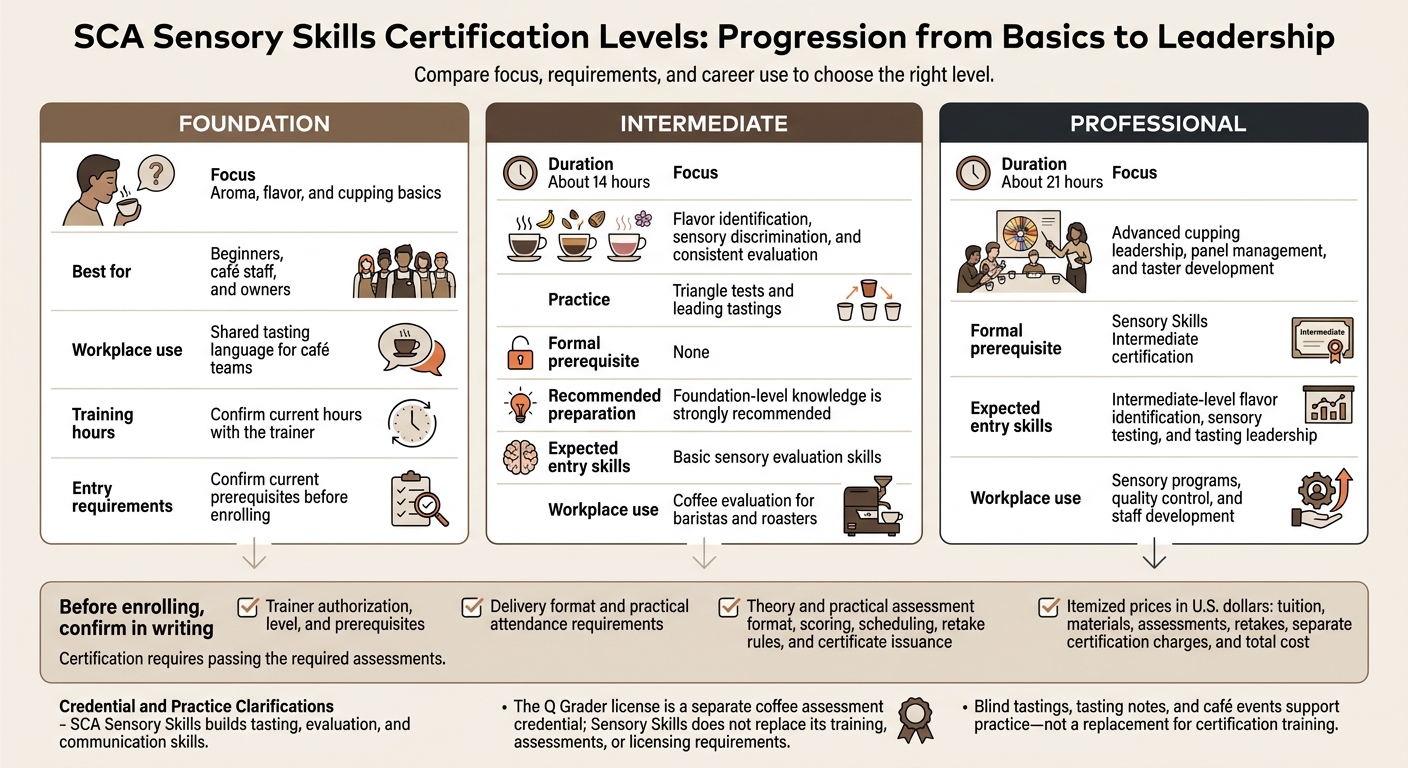
SCA Sensory Skills Certification: Compare All 3 Levels
Part 1 - SCA Sensory Skills Foundations Introduced
sbb-itb-1d31003
Sensory Skills Foundation: What to Expect
Foundation is the entry-level course for new tasters, café staff, and owners who want a shared language for coffee. It covers the core sensory terms every candidate needs.
Aroma, Flavor, and Cupping Basics
Learn core sensory terms such as fruit-forward, floral, and round, then apply them in cupping.
Entry Requirements and Preparation
Check the latest SCA course materials for current training hours, curriculum, and cupping protocol. Before registering, get written confirmation of any prerequisites, the assessment format, and the passing standard.
Intermediate and Professional: Skills and Entry Requirements
After Foundation, the focus moves from core language to testing, calibration, and leadership.
Intermediate: Sensory Tests and Leading Tastings
Sensory Skills Intermediate takes about 14 hours. It develops flavor identification, sensory discrimination, and consistent evaluation. Exercises include triangle tests, which build the discrimination skills needed to lead tasting evaluations.
The goal is to move beyond describing coffee toward evaluating it consistently and leading tastings.
Foundation certification isn’t required, but Foundation-level knowledge is strongly recommended.
Professional: Sensory Programs and Taster Training
Professional builds on Intermediate, shifting from evaluating coffee yourself to leading sensory programs.
Sensory Skills Professional takes about 21 hours and requires Sensory Skills Intermediate certification. The course covers advanced cupping leadership, panel management, and taster development.
Prerequisites by Level
Check the requirements before enrolling.
| Level | Formal prerequisite | Expected entry skills |
|---|---|---|
| Intermediate | None | Basic sensory evaluation skills |
| Professional | Sensory Skills Intermediate certification | Intermediate-level flavor identification, sensory testing, and tasting leadership |
Assessments, Practice, and Costs
Once you’ve chosen your level, check how you’ll be assessed and what you’ll pay.
Theory and Practical Exams by Level
Before enrolling, ask your Authorized SCA Trainer to confirm the assessment format, scoring, retake rules, and process for issuing certificates.
| Level | Theory assessment | Practical assessment |
|---|---|---|
| Foundation | Format, topics, scoring, and retake policy | Whether practical work is graded during training or separately |
| Intermediate | Format, topics, scoring, and retake policy | Required tasks, scoring criteria, and retake policy |
| Professional | Format, topics, scoring, and retake policy | Required tasks, scoring criteria, and retake policy |
Build a Sensory Practice Routine
With the assessment format clear, set up a repeatable practice routine. Use blind tastings, and keep preparation and evaluation methods consistent. Log dose, yield, extraction time, and tasting notes in a spreadsheet. This helps you avoid mistaking preparation changes for sensory differences.
Hold calibration sessions every two weeks, using the same coffees and scoring method.
Enrollment Checklist: Trainer, Fees, and Format
Before enrolling, get a written breakdown of:
- Trainer qualifications, course level, and prerequisites
- Delivery format and practical attendance requirements
- Included assessments, scheduling, and retake rules - including allowed attempts and which portions you must repeat after failing
- Itemized prices in U.S. dollars for tuition, materials, assessments, retakes, and any separate certification charges, plus the total cost
Compare current fees and policies directly.
Career Uses and Related Credentials
Using Sensory Skills at Work
Each level has a place in day-to-day coffee work.
Foundation gives café teams a shared tasting language. Intermediate helps baristas and roasters evaluate coffee. Professional supports quality control and staff development.
Customer-facing categories can make flavor choices easier to navigate.
In roasting and quality control, sensory data helps teams guide production, keep coffee consistent, and adjust water for each brew method. Advanced sensory skills also support omakase service, slow-bar menus, and staff training.
Sensory Skills Certification vs. the Q Grader License
SCA Sensory Skills and the Q Grader license serve different purposes. SCA Sensory Skills builds tasting, evaluation, and communication skills for everyday coffee work. The Q Grader license is a separate coffee assessment credential.
For some jobs, Sensory Skills is one step in a broader credential path.
| Area | SCA Sensory Skills | Q Grader license |
|---|---|---|
| Main focus | Sensory vocabulary, tasting, and evaluation | Coffee assessment |
| Workplace use | Helps with café service, roasting, quality control, and sensory education | Useful when a role calls for a separate assessment credential |
| Relationship | Can support Q Grader preparation but does not replace its training, assessments, or licensing requirements | Does not replace SCA sensory training |
Sensory Practice in Los Angeles
Los Angeles cafés and tastings give you a hands-on way to practice SCA sensory skills outside the classroom.
Find Cafés and Ask About Tastings
Plan neighborhood visits with Best Coffee Shops in Los Angeles, a curated directory of more than 200 coffee shops. Look for specialty cafés with multiroaster selections, slow bars, or pour-over programs. Use each visit to work on the aroma, flavor, and calibration skills covered in your course.
Ask cafés directly about public cuppings, guided tastings, or omakase experiences. These events usually take place at select locations. They offer extra practice, but they do not replace SCA training.
Once you choose a venue, bring a simple note template to make your tastings easier to compare.
Keep Tasting Notes and Confirm Event Details
Record the coffee’s name, origin, process, roast level, and brew method. Then note its aroma, flavor, acidity, body, and finish. If a detail is missing, mark it as unknown rather than guessing.
Notes from different cafés may not be directly comparable. Before heading out, confirm the event’s date, start time, exact location, reservation requirements, fees, and expected skill level with the venue. Check the café’s website or Instagram for seasonal changes and closures. If an event is advertised as certification training, verify the course level and trainer authorization.
Conclusion: Choose Your Level and Check Requirements
Choose Foundation for introductory tasting, Intermediate for structured evaluation in barista or quality control work, or Professional to lead sensory programs.
You’ll earn certification by passing the required assessments.
Before enrolling, check current prerequisites and assessment rules with the SCA. Confirm your AST and the total cost, including certification fees. After the course, keep tasting and calibrating.
FAQs
Does my SCA Sensory Skills certification expire?
SCA Sensory Skills certifications do not expire. Once you earn your certificate, it stays valid as a record of your completed training and assessment. Check with your provider to see whether your career path has any specific renewal or retesting requirements.
Can I complete sensory training online?
Yes, you can earn a barista certification online. Whether it’s worth it depends on your career goals. Online programs can help set consistent technical standards, but they can’t replace the hands-on practice needed to work in a professional setting. Many top-tier Los Angeles establishments put more weight on in-person experience, sensory labs, and mentorship than on online credentials.
How can I tell if I’m ready for Intermediate?
You’re ready for Intermediate when you consistently apply and improve core skills during café service. That means accurate espresso dosing, output, and timing; steady milk texture and serving temperature (°F); repeatable brew settings; and clear flavor recognition.
Track your progress through fewer remakes, less milk waste, and complete, dependable workflow and cleaning routines. Have a lead barista or supervisor check your hands-on results periodically during service.