I see mentorship as practice for leading a café - not a promise of promotion. Start with one task, such as running a shift briefing, then use supervised practice and feedback to check progress.
Here’s what I’d look for in a mentoring program:
- Leadership practice: Clear communication, delegation, staff coaching, conflict management, and service decisions - not just coffee skills.
- Workplace support: Paid learning time, trained mentors, clear boundaries, and access across shifts and languages.
- Progress checks: Track actions across shifts, plus any changes in pay or role. Confidence alone isn’t proof of leadership.
<u>The research has limits.</u> The reviewed industry reports don’t establish that mentorship improves promotions or pay. If you’re looking for a café job in Los Angeles, I’d ask how mentoring works before relying on a café’s promises.
The Best Way for Every Shop to Train Baristas | Shift Break Series
sbb-itb-1d31003
Leadership Skills Baristas Can Build Through Mentorship
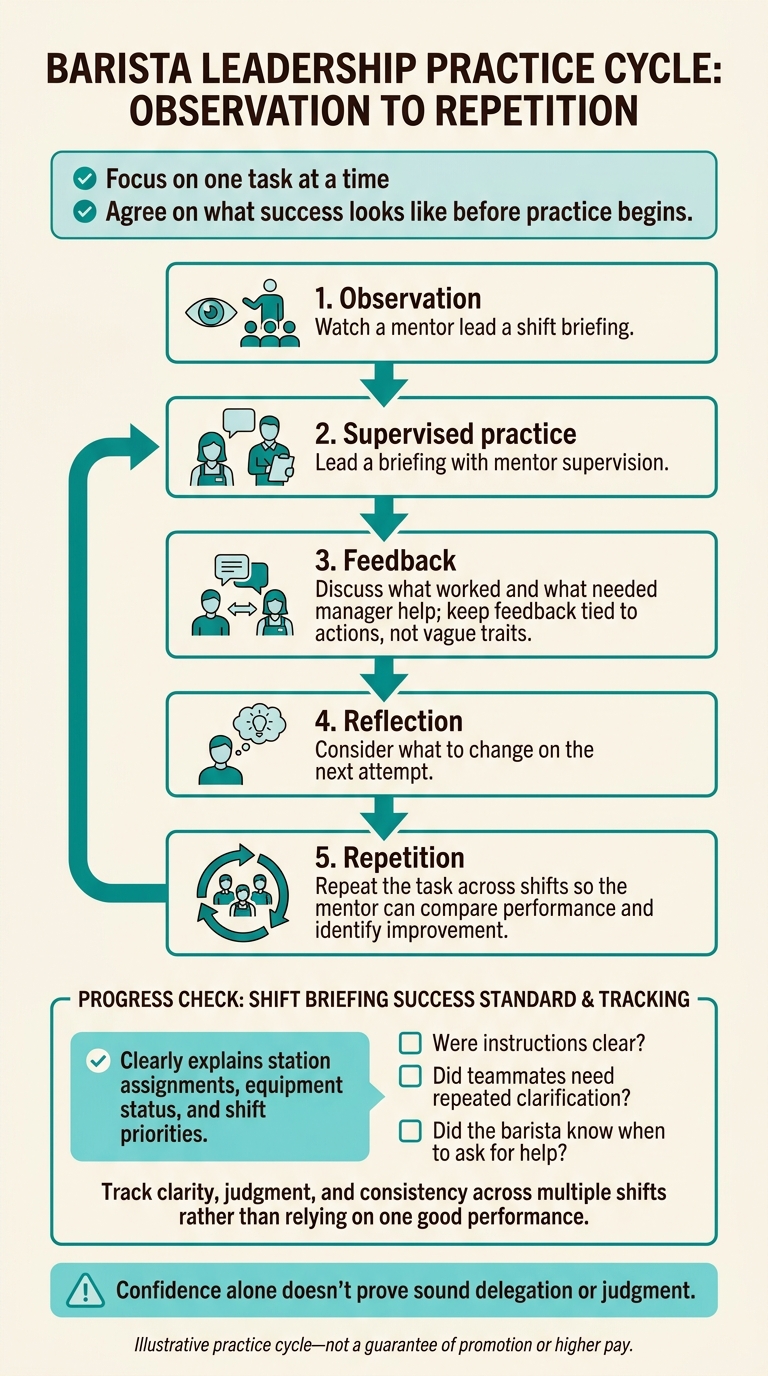
The Barista Leadership Mentoring Cycle
Mentorship in specialty coffee helps baristas put technical skills to work as leaders - running shifts, coaching teammates, and making service decisions.
Communication, Delegation, and Service Judgment
A barista leader needs to explain standards, coordinate teammates, balance service demands, and coach others. Mentoring gives baristas a chance to practice these duties with supervision. The hypothetical café scenarios below show what that practice can look like.
Leadership skill Mentoring activity Observable progress in a café Shift briefings Watch a briefing, then lead one with mentor feedback. Clearly explains station assignments, equipment status, and shift priorities. Delegation Assign stations under a manager’s supervision. Gives clear responsibilities and checks that teammates understand. Constructive feedback Practice describing a behavior and how to correct it. Gives specific, behavior-based tips without criticizing the person. Conflict management Role-play a coworker disagreement. Listens to both accounts and agrees on a workable next step. Service judgment Review a wait-time complaint with a mentor. Explains the delay clearly and asks for manager support when needed. Staff coaching Show a technique, then watch the learner repeat it. Checks understanding and adjusts the explanation when needed.
Confidence alone doesn’t prove sound delegation or judgment. Check whether instructions were clear, teammates needed repeated clarification, and the barista knew when to ask for help. Cafés also need to give mentors time, space, and clear expectations to support these habits.
Learning Through Observation, Practice, and Feedback
The mentoring cycle combines observation, supervised practice, feedback, reflection, and repetition.
In specialty coffee, that can mean watching a mentor at one of the best coffee shops in LA handle a rush, repeating the task during a quieter period, and then repeating it with feedback on what changed.
Focus on one task at a time, repeating it so the mentor can compare performance across shifts. Agree on what success looks like before practice begins.
Keep feedback tied to the barista’s actions, not vague traits. Discuss what worked, what needed manager help, and what improved on the next attempt. Track clarity, judgment, and consistency across multiple shifts rather than relying on one good performance.
How Cafés Can Support Mentorship
Leadership skills grow when cafés make room for them in daily work. Schedule mentoring as paid work, not something squeezed into spare time. Set one leadership goal, plan regular check-ins, and assign leadership duties with supervision.
Cafés can offer that support in several ways.
Comparing Coaching and Mentoring Formats
Choose a format that fits the barista’s role, schedule, and leadership goal.
| Format | Structure |
|---|---|
| Manager coaching | Scheduled manager feedback tied to work goals |
| Peer mentoring | Regular support from an experienced coworker |
| Onboarding mentor for early leadership practice | Named contact during onboarding |
| Leadership development track | Planned responsibilities with progress reviews |
Equal Access, Mentor Support, and Boundaries
Post clear criteria and open applications to employees across shifts. Pair mentors and mentees based on goals and availability - not who already knows whom. Train mentors, protect paid development time, and give them credit for their work.
Managers should handle discipline. Explain the limits of confidentiality and name a second contact for concerns or requests to change mentors.
The sources do not verify mentoring outcomes for women or underrepresented workers. Review who gets mentoring, protected learning time, and leadership assignments. A welcoming mission alone doesn’t mean everyone has fair access.
For baristas looking for jobs in Los Angeles, the key question is whether cafés put these systems into practice.
Finding Mentoring Opportunities in Los Angeles Cafés
Ask who trains new hires, how shift leaders are selected, and whether learners get scheduled time with a mentor. Use Best Coffee Shops in Los Angeles to narrow your search by neighborhood and atmosphere, then confirm mentorship details with each café.
Research Limits and Mentoring Risks
What the Research Can and Cannot Show
Mentoring exists in Los Angeles cafés, but evidence of long-term leadership gains remains thin. These examples show what is possible - not what workers can typically expect. Technical skill does not prove leadership.
Small samples, selection bias, and limited follow-up make firm conclusions difficult. Workers already likely to advance may also be more visible to mentors. Technical standards can make instruction more consistent, but they do not reveal whether mentors favor certain employees.
Where Barista-Specific Research Is Missing
The reviewed material does not establish whether mentoring improves promotions or pay for U.S. café workers. It also does not show how those outcomes differ for immigrant and other underrepresented staff. Questions about peer mentoring and mentoring across cafés remain unanswered.
Local reporting points to bilingual workshops and worker-advocacy partnerships, but those examples alone do not show who advances or benefits.
Cafés should set a baseline for observable leadership behaviors, such as delegation and service judgment, and track promotions or pay changes alongside them. Measuring changes at set intervals can help distinguish mentorship effects from general job growth. These research gaps also point to a need for structured workplace support.
Conclusion: Mentorship Needs Workplace Support
Mentorship can turn technical practice into leadership practice. Clear SOPs give mentors a shared basis for feedback. With limited barista-specific research, café SOPs remain the clearest practical model for leadership development.
Set clear goals, offer regular feedback, and make mentoring available across shifts and languages. Language support can help more people take part. Schedule paid mentoring time and progress reviews that track coffee skills, communication, and team support.
Mentorship should complement - not replace - workplace support, advocacy, and healthy working conditions. Give people the support they need to practice leadership.
FAQs
How do I know I’m ready for leadership mentoring?
You’re ready for leadership mentoring when your focus extends beyond daily tasks to workflow efficiency, staff training, and team development. If you mentor junior staff, create standard operating procedures, or manage inventory, you’re already showing leadership traits.
Readiness also means being prepared to balance your technical work with your colleagues’ mental and physical well-being. That balance puts you in a strong position to build your management skills through mentorship.
What should I do if my mentor isn’t helping?
Ask for a formal check-in to discuss your development goals and identify where you need guidance. Barista burnout and skill gaps often point to workplace issues - not personal failings.
If support at work remains limited, consider professional training or industry workshops through respected specialty coffee roasters and educational programs across Los Angeles. These structured learning opportunities can help you work through obstacles and build your leadership skills.
How can I use mentoring progress to request a promotion?
Show how your growing skills - whether you’ve mastered brewing techniques, put standard operating procedures into practice, or improved customer engagement - have helped the shop succeed.
When asking for a promotion, explain how mentorship has helped you support team workflow and improve the guest experience. Tie your progress to the café’s performance standards to show you’re ready for a leadership role.


